Qu4351 Bobbin – Laser Welding Wire 13/4 / ER410NiMo (1.4351) – Turbines, Pumps, Hydropower

€124.95
Qu4351 Bobbin – Laser Welding Wire 13/4 / ER410NiMo (1.4351) – Turbines, Pumps, Hydropower
Qu4351 is the 13/4 wire: DIN EN ISO 14343-A G/W 13 4 · AWS ER410NiMo · ISO 14343-B SS410NiMo · filler no. 1.4351. Cr 13 % · Ni 4 % · Mo 0.5 %.
The nickel is what sets it apart from plain ER410: it keeps the structure martensitic without having to raise the carbon (only 0.03 % C). The result is a weld metal that is strong (Re 600 / Rm 800 MPa) and yet stays tough (A 15 %) — the combination that turbine runners, pump casings and hydropower components in 1.4313 / 1.4317 demand. Also for build-ups on unalloyed steels; watch the dilution.
Recommended base materials
- 1.4313 (X3CrNiMo13-4)
- 1.4002, 1.4317, 1.4414
- Further 13 % Cr steels and cast steel
Typical applications
- Turbine runners and hydropower components
- Pump casings and impellers
- Valves in 13 % Cr cast steel
- Build-ups on unalloyed steels (watch dilution)
Properties and advantages
- Strong and tough at once — Re 600 · Rm 800 MPa · A 15 %
- Low carbon (C 0.03 %) via nickel alloying instead of carbon
- Corrosion resistance matching 13 % Cr(Ni) steels
- 250 HB
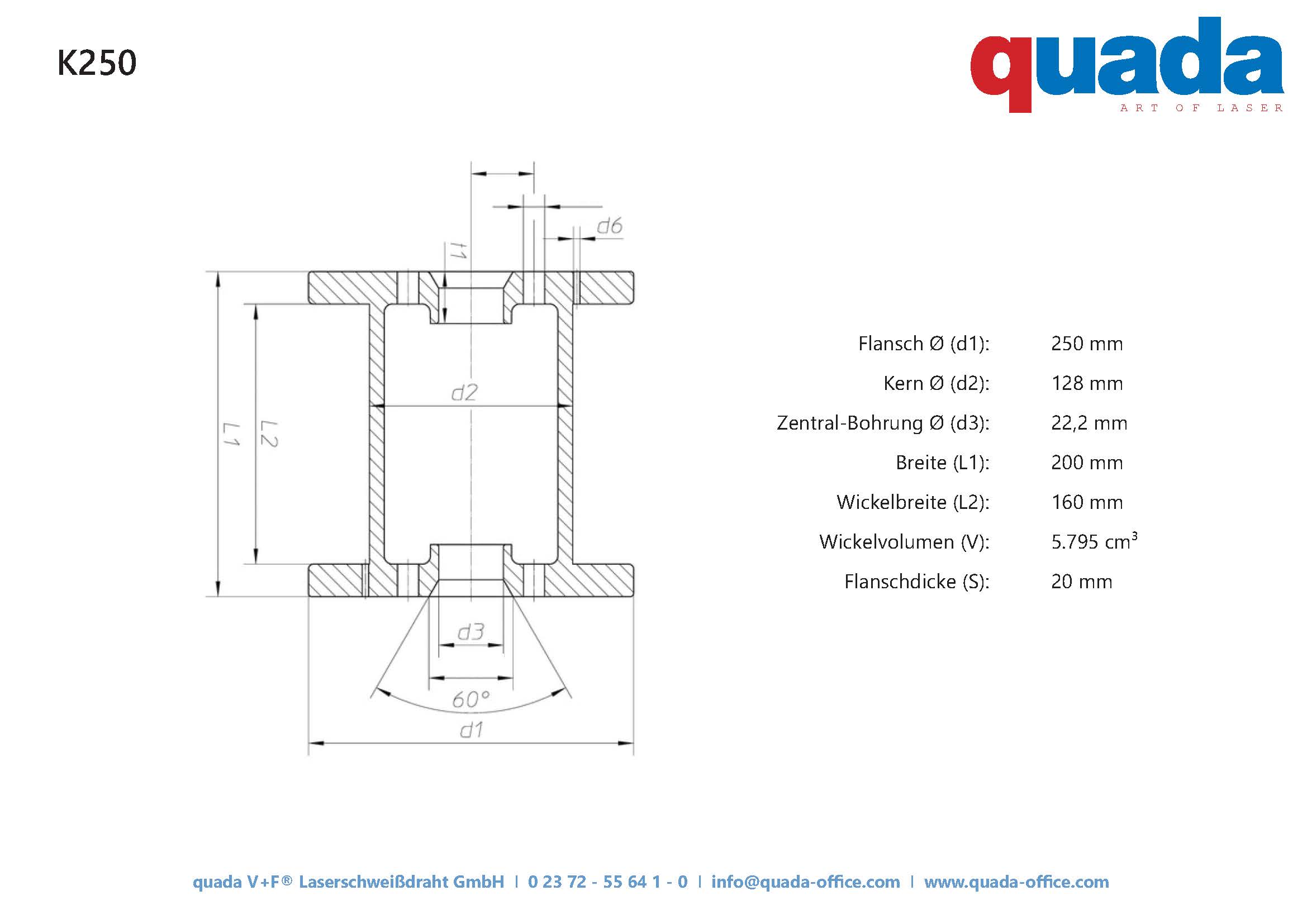
Bobbin form: K125, K250, K80, MA125, SH253 — wire weight 100 g–500 g, Ø 0,3 mm – 0,8 mm.
Material analysis (wt.-%)
C 0.03 | Si 0.30 | Mn 0.40 | Cr 13.00 | Ni 4.00 | Mo 0.50 | Fe balance
Download
| Bobbin size: | K80, K125, K250, MA125, SH253 |
|---|---|
| Bobbin weight: | 100 g, 200 g, 500 g |
| Diameter: | 0,3 mm, 0,4 mm, 0,5 mm, 0,6 mm, 0,8 mm |
| Recommendations for basis material: | 1.4002, 1.4313, 1.4317, 1.4414, other 13%Cr-steels |
| Wire: | Laser welding wire |
Related products

Qu4351 is the 13/4 wire: DIN EN ISO 14343-A G/W 13 4 · AWS ER410NiMo · ISO 14343-B SS410NiMo · filler no. 1.4351. Cr 13 % · Ni 4 % · Mo 0.5 %.The nickel is what sets it apart from plain ER410: it keeps the structure martensitic without having to raise the carbon (only 0.03 % C). The result is a weld metal that is strong (Re 600 / Rm 800 MPa) and yet stays tough (A 15 %) — the combination that turbine runners, pump casings and hydropower components in 1.4313 / 1.4317 demand. Also for build-ups on unalloyed steels; watch the dilution.Recommended base materials1.4313 (X3CrNiMo13-4)1.4002, 1.4317, 1.4414Further 13 % Cr steels and cast steelTypical applicationsTurbine runners and hydropower componentsPump casings and impellersValves in 13 % Cr cast steelBuild-ups on unalloyed steels (watch dilution)Properties and advantagesStrong and tough at once — Re 600 · Rm 800 MPa · A 15 %Low carbon (C 0.03 %) via nickel alloying instead of carbonCorrosion resistance matching 13 % Cr(Ni) steels250 HBRod form: Rod lengths 1000 mm and 333 mm, Ø 0,3 mm – 0,8 mm. Material analysis (wt.-%)C 0.03 | Si 0.30 | Mn 0.40 | Cr 13.00 | Ni 4.00 | Mo 0.50 | Fe balance

QuFe18 is the martensitic 13 % Cr wire for general mechanical and plant engineering: AWS ER410 · ~1.4009.It is a hardenable material — it hardens as it cools. That is the decisive difference from the austenitic stainless wires: here you preheat and cool slowly rather than keeping things cold. In return you get a deposit that polishes and machines well and can afterwards be tempered to service hardness — the classic combination for valves, shafts, pump parts and sealing faces.Recommended base materials1.4000, 1.4006, 1.4008 — martensitic 13 % Cr steelsAISI 410, AISI 420 — the corresponding US gradesBuild-ups on 1.2083 and 1.2085Build-ups on unalloyed and low-alloy steels up to 450 °CTypical applicationsValves and sealing facesShafts and bearing seatsPump and turbine componentsRepairs on martensitic Cr steels in mechanical engineeringProperties and advantagesReadily polishable and machinable — the repair can be finished cleanlyCorrosion-resistant in water, gas and steamHardness as welded 150–225 HBWeld metal: Re 380 MPa · Rm 550 MPa · A 15 %Bobbin form: K125, K250, K80, MA125, SH253 — wire weight 100 g–500 g, Ø 0,2 mm – 0,8 mm. Material analysis (wt.-%)C 0.08 | Si 0.6 | Mn 0.65 | Cr 13.0 | Ni 0.4 | Fe balance
QuMed4009 is a martensitic 13 % chromium steel to EN ISO 14343-A G/W 13 · AWS A5.9 ER410 (filler material no.: ~1.4009). Unlike the austenitic wires of the QuMed range, this weld metal hardens on cooling — it is a quench-and-temper material, not an austenite.The wire is intended for components that need corrosion resistance in water, gas and steam atmospheres, and for build-ups on unalloyed and low-alloy steels up to 450 °C. The weld metal is readily polishable and machinable, hardness as welded 150–225 HB.Recommended base materials1.4000, 1.4006, 1.4008 — martensitic 13 % Cr steelsAISI 410, AISI 420 — the corresponding US gradesBuild-ups on 1.2083 and 1.2085Build-ups on unalloyed and low-alloy steels up to 450 °CTypical applicationsStructural parts in water, gas and steam atmospheresBuild-ups on tool steels 1.2083 / 1.2085Components that are subsequently polishedRepairs on martensitic 13 % Cr componentsProperties and advantagesReadily polishable and machinable — the repair can be finished cleanlyCorrosion-resistant in water, gas and steamHardness as welded 150–225 HBWeld metal: Re 380 MPa · Rm 550 MPa · A 15 %Bobbin form: K125, K250, K80, MA125, SH253 — wire weight 100 g–500 g, Ø 0,2 mm – 0,6 mm. Material analysis (wt.-%)C 0.08 | Si 0.6 | Mn 0.65 | Cr 13.0 | Ni 0.4 | Fe balance
QuFe18 is the martensitic 13 % Cr wire for general mechanical and plant engineering: AWS ER410 · ~1.4009.It is a hardenable material — it hardens as it cools. That is the decisive difference from the austenitic stainless wires: here you preheat and cool slowly rather than keeping things cold. In return you get a deposit that polishes and machines well and can afterwards be tempered to service hardness — the classic combination for valves, shafts, pump parts and sealing faces.Recommended base materials1.4000, 1.4006, 1.4008 — martensitic 13 % Cr steelsAISI 410, AISI 420 — the corresponding US gradesBuild-ups on 1.2083 and 1.2085Build-ups on unalloyed and low-alloy steels up to 450 °CTypical applicationsValves and sealing facesShafts and bearing seatsPump and turbine componentsRepairs on martensitic Cr steels in mechanical engineeringProperties and advantagesReadily polishable and machinable — the repair can be finished cleanlyCorrosion-resistant in water, gas and steamHardness as welded 150–225 HBWeld metal: Re 380 MPa · Rm 550 MPa · A 15 %Rod form advantage: Ideal for manual build-up welding with constant wire feed — also in hard-to-reach areas.Rod form: Rod lengths 1000 mm and 333 mm, Ø 0,2 mm – 0,8 mm. Material analysis (wt.-%)C 0.08 | Si 0.6 | Mn 0.65 | Cr 13.0 | Ni 0.4 | Fe balance
QuMed4009 is a martensitic 13 % chromium steel to EN ISO 14343-A G/W 13 · AWS A5.9 ER410 (filler material no.: ~1.4009). Unlike the austenitic wires of the QuMed range, this weld metal hardens on cooling — it is a quench-and-temper material, not an austenite.The wire is intended for components that need corrosion resistance in water, gas and steam atmospheres, and for build-ups on unalloyed and low-alloy steels up to 450 °C. The weld metal is readily polishable and machinable, hardness as welded 150–225 HB.Recommended base materials1.4000, 1.4006, 1.4008 — martensitic 13 % Cr steelsAISI 410, AISI 420 — the corresponding US gradesBuild-ups on 1.2083 and 1.2085Build-ups on unalloyed and low-alloy steels up to 450 °CTypical applicationsStructural parts in water, gas and steam atmospheresBuild-ups on tool steels 1.2083 / 1.2085Components that are subsequently polishedRepairs on martensitic 13 % Cr componentsProperties and advantagesReadily polishable and machinable — the repair can be finished cleanlyCorrosion-resistant in water, gas and steamHardness as welded 150–225 HBWeld metal: Re 380 MPa · Rm 550 MPa · A 15 %Rod form advantage: Ideal for manual build-up welding with constant wire feed — also in hard-to-reach areas.Rod form: Rod lengths 1000 mm and 333 mm, Ø 0,2 mm – 0,6 mm. Material analysis (wt.-%)C 0.08 | Si 0.6 | Mn 0.65 | Cr 13.0 | Ni 0.4 | Fe balance
QuFe10 is the standard filler metal for modifying and repairing mould cavities in the quenched and tempered plastic mould steels 1.2311, 1.2312, 1.2162, 1.2738, 1.2764 and 1.2767. Standard: DIN EN ISO 21952-A G/W MoSi · AWS A5.28 ER70S-A1 (material no. 1.5424). Achievable hardness: 28–37 HRC.Recommended base materials1.2311, 1.2312 — quenched and tempered plastic mould steels1.2738 — Ni-alloyed mould steel for large tools1.2162, 1.2764, 1.2767 — further mould steels15Mo3, 16Mo3, 19Mn6, 17Mn14, GS-22Mo4 — creep-resistant boiler and fine-grain steelsWStE255 to WStE460, HI, HIITypical applicationsMould cavity modifications — contour corrections in injection mouldsRepair of wear and chipping on parting linesFilling of milling and EDM errorsJoint and build-up welding on quenched and tempered mould steelsCreep-resistant boiler and fine-grain structural steelsProperties and advantagesAchievable hardness 28–37 HRC — matching the base hardness of tempered mould steelsWeld metal: Re > 460 MPa · Rm > 530 MPa · A > 20 %Post-processing: EDM-machinable, texturable, polishable, chrome-platable, etchable, nitridable, hardenableThe repair can be processed just like the base material — including graining and polishingBobbin form: K125, K250, K80, MA125, SH253 — wire weight 100 g–500 g, Ø 0,2 mm – 0,8 mm. Material analysis (wt.-%)C 0.1 | Si 0.6 | Mo 0.5 | Mn 1.1 | Fe balance
QuFe10Cr is the CrMo-alloyed variant for highly stressed mould cavities in the tempered materials 1.2311, 1.2312, 1.2162, 1.2738, 1.2764 and 1.2767. The chromium content in the filler raises tensile strength, cutting-edge retention and wear resistance. Suitable for long-term service up to 570 °C. Standard: EN ISO 21952-A G/W CrMo1Si · AWS A5.28 ~ER80-SB2 (material no. 1.7339). Achievable hardness: 27–38 HRC.Recommended base materials1.2311, 1.2312, 1.2162, 1.2738, 1.2764, 1.2767 — tempered mould steels42CrMo4, AISI 4140, AISI 4130 — quenched and tempered steels25CrMo4, 13CrMo4-4, GS-17CrMo5-5 — creep-resistant CrMo steelsTypical applicationsHighly stressed mould cavities with contour wearRepair of 42CrMo4 / AISI 4140 componentsHeat-resistant long-term service up to 570 °CCutting edges and parting lines with higher service-life demandsBuild-up welding on creep-resistant CrMo steelsProperties and advantagesAchievable hardness 27–38 HRC — depending on machining and weld layersChromium raises tensile strength, cutting-edge retention and wear resistance compared with the standard mould-steel wireLong-term service temperature up to 570 °CWeld metal: Re > 480 MPa · Rm > 570 MPa · A > 22 %Post-processing: EDM-machinable, texturable, polishable, chrome-platable, etchable, nitridable, hardenableBobbin form: K125, K250, K80, MA125, SH253 — wire weight 100 g–500 g, Ø 0,2 mm – 0,8 mm. Material analysis (wt.-%)C 0.1 | Si 0.5 | Mo 0.5 | Mn 1.1 | Cr 1.2 | Fe balance